 Fude Machinery-wood crusher manufacturer
Send A MessageWe support device customization. Please specify your material and model requirements, and we will reply to you promptly.
sawdust making machine
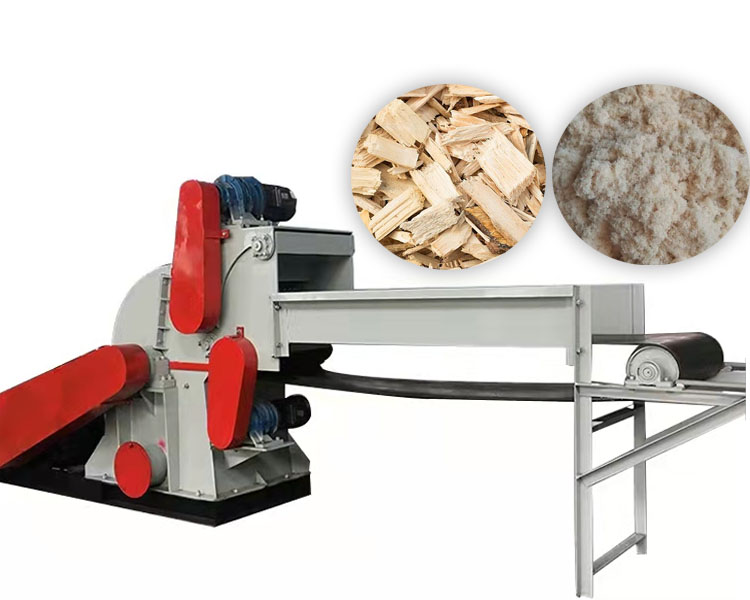
What is wood processing machinery
Sawdust Crusher is a highly efficient and multi-functional wood processing equipment designed for crushing wood waste (such as branches, chips, trimmings, bark, bamboo, etc.) and fibrous materials (such as corn stalks, sorghum stalks, thatch, etc.) into uniform sawdust.
Its core advantage lies in efficient crushing, uniform particles, easy operation, low maintenance costs, widely used in wood processing, biomass energy, furniture manufacturing, edible fungi cultivation, papermaking and other industries, to help enterprises to achieve resource utilization of waste materials and green production.
Table of Contents
- What is wood processing machinery
- The core technology and principle of wood crusher
- Parameters of forced feeding pulverizer: support customization
- Functions and Uses of Wood Chipper
- Performance characteristics of wood pallet crusher
- How Do You Choose the Wood Chipper?
- Wood processors: consolidated proposal
The core technology and principle of wood crusher
- Dual pulverizing mechanism
- Blade cutting: High-precision cutting blade cuts the material initially, ensuring uniform particles.
- High-speed airflow impact: rotor rotation generates high-speed airflow, so that the material is accelerated and repeatedly impacted in the airflow to realize the second crushing and micro-material sorting, and the crushing rate is increased by more than 50%.
- Sieve mesh control particle size: by replacing the sieve mesh with different apertures, the particle size of the finished sawdust can be adjusted (15-500 mesh) to meet diversified needs.
- Multi-stage crushing process
- The material enters into the crushing chamber through the inlet, and passes through the chain plate conveying, pressure roller crushing, cavity processing and screen grading discharge in turn, which ensures strong fine crushing capacity and high quality of finished products.
- Structural composition
- Main machine: composed of rotor, upper body and lower body, integrated with chipping device, pulverizing device and fan.
- Auxiliary system: equipped with analyzer, powder collector, dust collector, forming a continuous operation system and simplifying the process.
- Power system: support motor (5.5-75kW) or diesel engine (15-75hp) drive, adapting to fixed and mobile operation scenes.
Parameters of forced feeding pulverizer: support customization
| Model | Power (kW) | Speed (r/min) | Number of hammer blades (pieces) |
| 500 | 22-30 | 2700 | Reinforced 30 pieces |
| 600 | 30-37 | 2700 | Reinforced 40 pieces |
| 800 | 37-45 | 2700 | Reinforced 50 pieces |
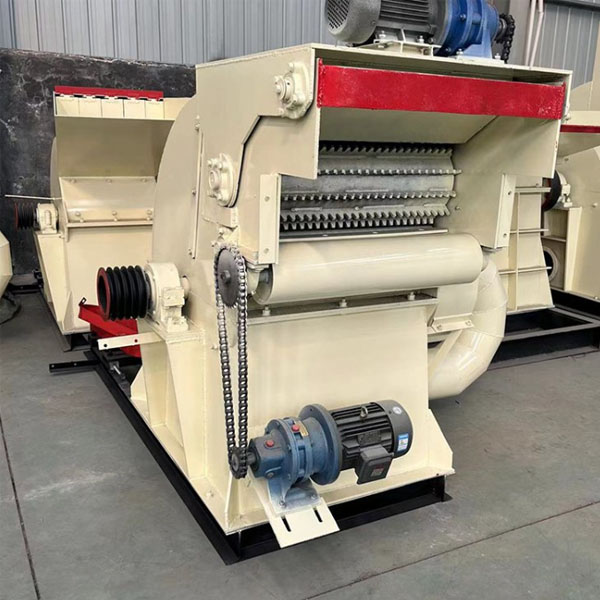
Single host wood crusher
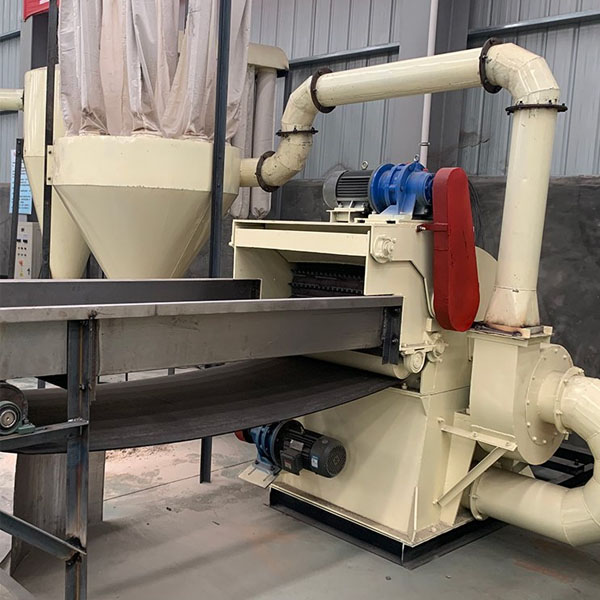
60 type wood crusher
Functions and Uses of Wood Chipper
Wood slicer is a specialized equipment in the field of wood processing, which is mainly used to cut raw materials such as wood, bamboo, board veneer and logging residues into uniform craft wood slices.
- Multi-material adaptability
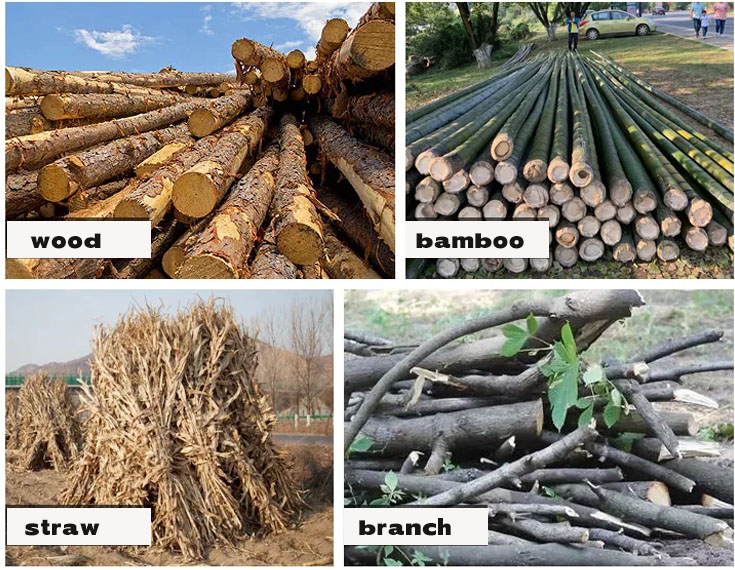
- Woody materials: logs such as pine, miscellaneous wood, poplar, fir, and branches and small-diameter wood with a diameter of less than 120mm.
- Non-wood raw materials: bamboo, sugar cane, reeds, corn stalks, cotton stalks and other fibrous materials.
- Waste utilization: edges of construction templates, waste wood squares, logging residues, etc. to realize resource recycling.
- Industrial application scenarios
- Paper industry: wood chips as pulp raw material to meet the production needs of chemical wood pulp and high yield chemical wood pulp.
- Manufacturing of wood-based panels: to provide uniform wood chips for particleboard, medium density fiberboard (MDF) and high density fiberboard (HDF).
- Biomass energy: Wood chips are used as fuel for biomass boilers, briquetted fuel or processed in biomass pellet mills to support power generation and heating.
- Textile industry: wood chips are used as auxiliary raw material for textile fibers.
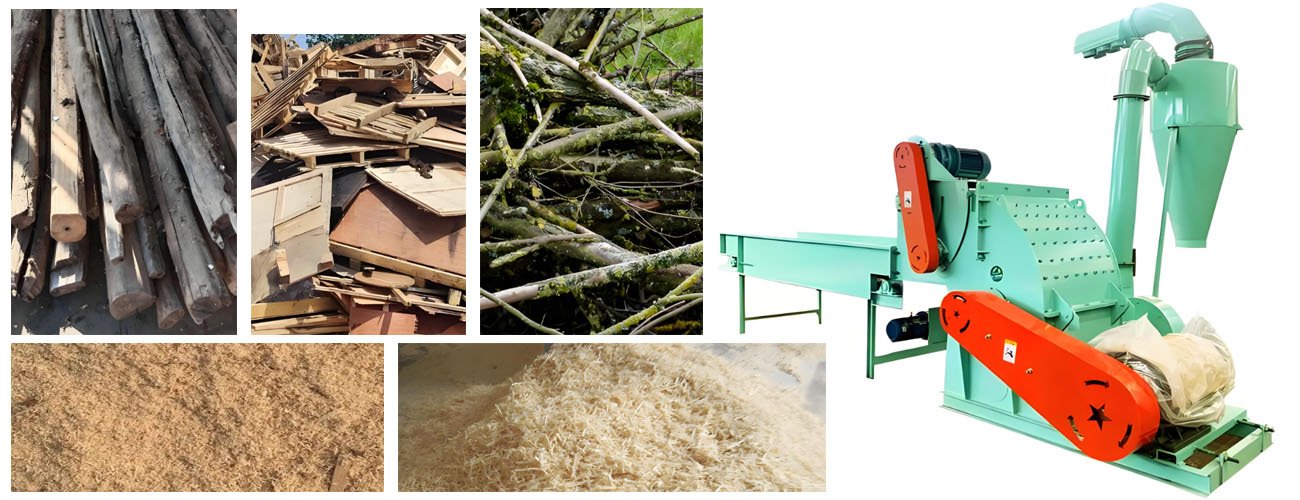
Performance characteristics of wood pallet crusher
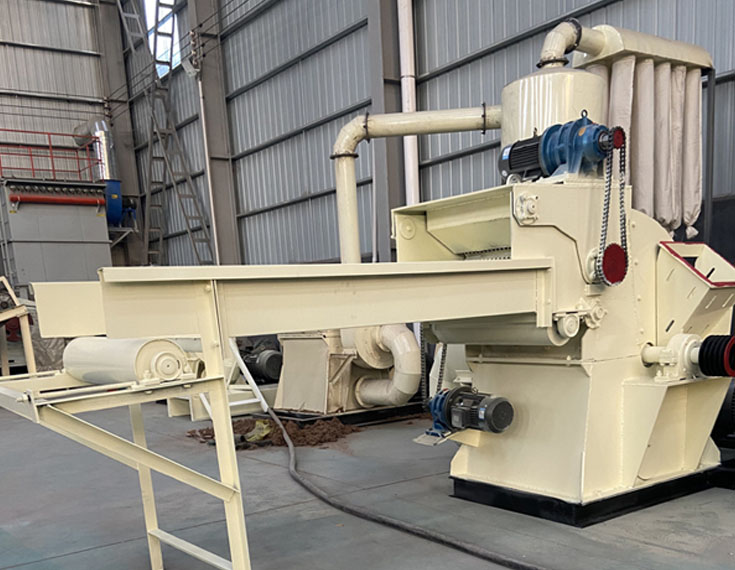
Forced feeding is based on the wood crusher, using the principle of magnetic roller extrusion cutting and the friction of hammer cutting on the spindle to crush the material. Compared to the original wood crusher, the advantage of an automatic loading wood crusher is that it saves time and effort. By using high-strength magnetic rollers for squeezing and cutting, it can accelerate the crushing of materials. Therefore, this wood crusher equipment is also known as a forced wood feed crusher. Its feeding and discharging speed is very fast, and it is not easy to block the sieve.
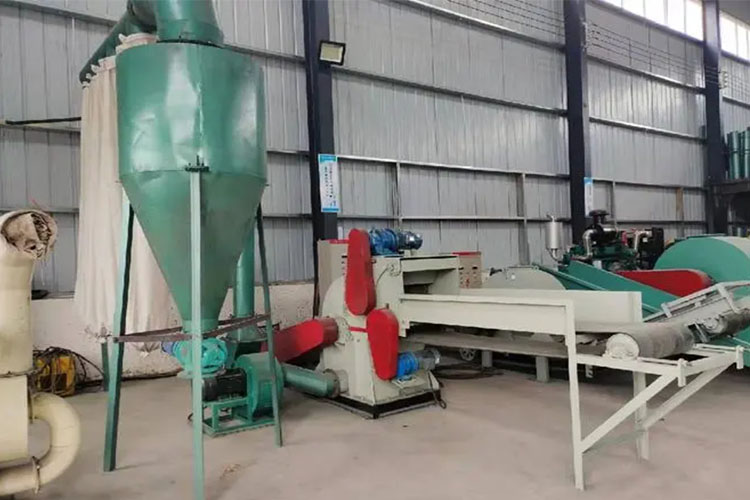
Complete set of forced feed crusher
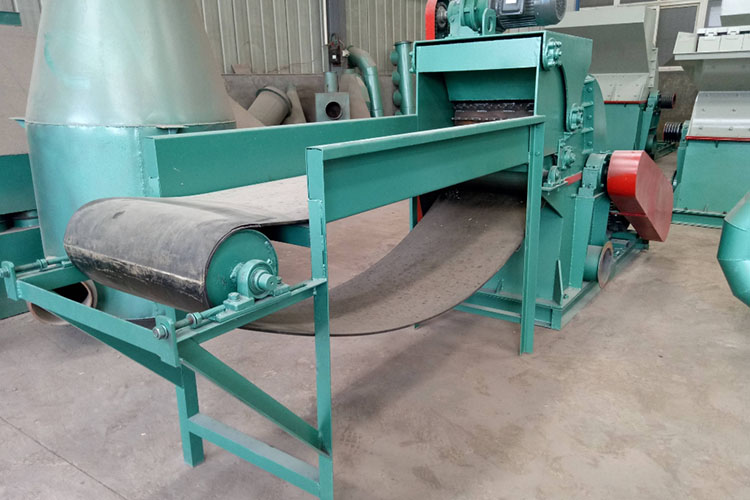
Extended feed crusher
How Do You Choose the Wood Chipper?
To choose the perfect wood chipper, you must clearly define your raw material, your desired output chip, and your required capacity.
Do you need an electric motor or a diesel engine?
An electric motor is cheaper to run and maintain and produces zero emissions, making it perfect for a fixed installation in a factory or sawmill. A diesel engine offers complete portability, allowing you to take the machine directly to the worksite.
What is your raw material?
Be specific. Are you chipping 50cm diameter hardwood logs, or are you processing small, twisted orchard branches? The size and type of your wood will determine the required infeed opening and the power of the machine. A machine designed for softwood logs will struggle with dense, hard tropical wood.
What chip size and quality do you need?
Talk to your potential buyers. Do they need 20mm chips for their boiler, or 10mm chips for their board press? The required output size will determine the setup of the knives and the screen inside the chipper. We can configure our machines to produce the exact size you need.
What is your required hourly capacity?
How many tons per hour do you need to process to run a profitable business? Be realistic. It’s better to invest in a machine that can handle your peak needs than to constantly run a smaller machine at its absolute limit. We offer models ranging from a few tons per hour to over 50 tons per hour.
Wood processors: consolidated proposal
Choosing the right wood crushing equipment is a matter of your preparation of crushed materials, the demand for the output of the equipment, and the affirmation of whether the effect of the discharged wood chips or the effect of the wood chips. When you have a certain answer, the choice of model is much smoother.
Your next step should be to define your project’s specifications. Once you have a clear idea, the best course of action is to speak with an experienced equipment manufacturer. We can provide technical advice to ensure your choice is the right one.